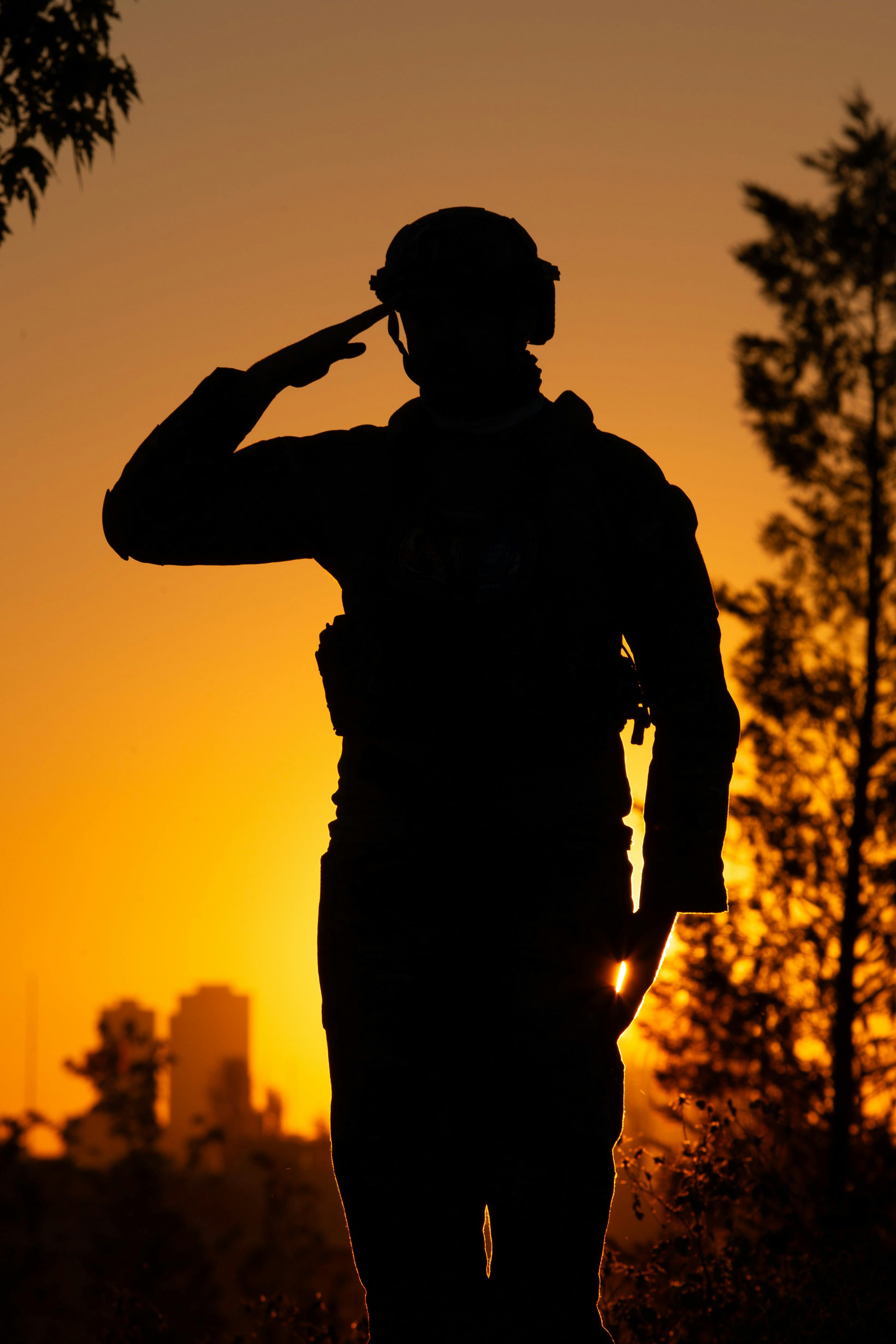
Every Memorial Day, we pause.
We say thank you. We lay flowers. We remember names carved into stone walls and painted on folded flags.
We honor the ones who didn't come home.
But here's something that doesn't get said enough on days like this:
Veterans are still falling.
Not on foreign soil. Not in combat. But right here at home, quietly, in the aftermath of wars that technically ended years ago.
The VA estimates that approximately 17 veterans die by suicide every single day in this country. Every day. That's not a statistic that should be easy to read and move past.
We memorialize the fallen. And we should. But we are still losing our troops, and we have a chance to do something about it.
So on a day when we honor the ones we couldn't save, let's also turn our attention to the ones we still can.
Because something is changing. Something real. And for the first time in a long time, there is genuine reason for hope.
For decades, so many veterans have cycled through the same exhausting loop. Medications. Talk therapy. Numbness. Alcohol. Survival mode. And still, not really healing.
Not getting better. Just getting through.
PTSD. Depression. Traumatic brain injuries. Addiction. Hypervigilance. Isolation. Suicidal ideation.
These aren't abstract diagnoses. They are the daily reality for hundreds of thousands of people who raised their hand, served this country, and came home changed in ways that nobody fully prepared them for.
And what makes what's happening right now so significant is that the conversation around veterans and psychedelic-assisted healing has moved well beyond the underground. It's not being whispered about in corners of the internet by people afraid to say it out loud.
It's happening at the highest levels of government, medicine, and research.
In April 2026, the White House signed an executive order specifically aimed at accelerating research and access pathways for psychedelic therapies, with veterans at the center of it. The order directly targeted PTSD, traumatic brain injuries, and treatment-resistant mental health conditions, the exact things that have been quietly destroying lives inside the veteran community for years.
That same order directed federal agencies to accelerate psychedelic research, reduce regulatory bottlenecks, support Right to Try pathways, and prioritize compounds like MDMA, psilocybin, and ibogaine for serious mental illness.
You can agree with the politics or not. That's not really the point.
The point is the momentum is real. And it's building fast.
The Department of Veterans Affairs is now funding psychedelic research for PTSD, depression, alcohol use disorder, and trauma-related conditions. The Department of Defense is funding MDMA-assisted therapy studies for active-duty soldiers. Utah recently authorized state-funded psychedelic research for veterans with treatment-resistant PTSD, specifically using MDMA, psilocybin, and 5-MeO-DMT. Bipartisan bills are being discussed right now to create psychedelic-focused Centers of Excellence inside VA facilities.
Major veteran organizations, including the Disabled American Veterans and the Veterans of Foreign Wars, have publicly acknowledged the growing promise of these therapies.
The research is catching up to what many veterans have already been quietly reporting for years.
In Phase 3 clinical trials for MDMA-assisted therapy for PTSD, roughly two-thirds of participants no longer met the diagnostic criteria for PTSD afterward. Not reduced symptoms. Not "doing a little better." No longer meeting the criteria.
That's not a small thing.
And yet, even with all of that, the data doesn't fully capture what veterans themselves describe when they talk about these experiences.
They don't usually talk about brain chemistry. They talk about something harder to quantify.
They say things like: For the first time in years, I felt connected again.
Connected to themselves. To other people. To something worth living for.
Army Ranger Jesse Gould knows exactly what that feels like. After multiple combat deployments, traumatic brain injuries, PTSD, and a serious struggle with alcohol, he found healing through psychedelics and went on to found the Heroic Hearts Project. His organization has now helped over 1,500 veterans access structured psychedelic healing retreats and support systems.
His story isn't unique anymore. It's becoming part of a larger pattern.
Researchers are starting to understand why. Many now believe that psychedelics may create a window of neurological flexibility, a kind of temporary openness in the brain that allows deeply ingrained trauma patterns to be examined, processed, and sometimes released in ways that traditional therapies simply haven't been able to access.
But here's what's also become clear as this field has matured:
The substance is only part of the story.
What actually determines whether someone heals, or whether they're overwhelmed, is the container around the experience.
The preparation. The trauma-informed care. The proper screening. The ethical facilitation. The integration support that follows.
The guide matters. A lot.
And this is where something beautiful is starting to emerge inside the veteran community itself.
Some of the people best equipped to hold space for veterans going through these experiences are other veterans.
Not because every veteran is automatically suited to do this work. But because lived experience creates a depth of understanding that can't be taught in a classroom. A veteran who has personally walked through trauma, moral injury, identity loss, hypervigilance, and the disorientation of coming home understands things that others simply cannot fully relate to.
There's a reason veterans tend to trust other veterans. Shared experience creates safety. In psychedelic facilitation, safety is everything.
For some veterans, this is becoming the next chapter of service.
Not combat. Not survival. Something new.
Holding space. Supporting integration. Building community around healing. Helping fellow veterans navigate legal, ethical pathways toward recovery. Creating environments grounded in humility, trust, and the kind of understanding that only comes from having been there yourself.
This is part of what Psychedelic Concierge™ is working toward. Not glorifying these medicines. Not encouraging recklessness. Not bypassing the weight and seriousness of trauma.
But professionalizing this space. Training ethical, trauma-informed, grounded practitioners who understand that preparation matters, integration matters, professionalism matters, and humility matters, especially when supporting people who've already been through enough.
This Memorial Day, we honor those who gave everything.
We remember the fallen. We carry their names with us.
And we refuse to add more names to that list if we don't have to.
The research is accelerating. The laws are evolving. The conversation has changed.
Maybe the most remarkable thing happening right now is this: many veterans aren't just surviving anymore.
They're becoming leaders in the healing movement itself.
And for some of them, the next form of service may look very different from the last one.
But it may still save lives.
Peace and love, Sophia
Sources referenced throughout this article include the U.S. Department of Veterans Affairs, The White House Executive Order on Mental Health Treatments, Military.com, The Guardian, and veteran advocacy organizations supporting psychedelic research and treatment pathways for PTSD and trauma-related conditions.



.svg)